Diving & Snorkeling · Isla Mujeres Travel Guide
Isla Mujeres Dive Sites: Reefs, Wrecks and Offshore Expeditions
Explore Isla Mujeres dive sites from Manchones and MUSA to C-58, C-55, advanced reefs and custom offshore expedition objectives.
How to use this guide
A dive-site name is a starting point, not a reservation guarantee. Certification, recent experience, depth and current comfort, equipment, sea state, protected-area access and the captain's operating plan determine the final site.
Exact dive coordinates and navigation marks are intentionally omitted. Our illustrative map is a discovery tool, not a source of descent positions, legal boundaries or operating routes. ATIM's service groupings do not replace the applicable protected-area rules.
Explore the Dive Sites on the Map
Select individual reefs, underwater art, wrecks and expedition objectives to see how they relate to the island. The positions are illustrative, not navigation or descent points.
Loading the map…
Illustrative activity locations, not for navigation. Map imagery by OpenStreetMap and Leaflet (unpkg). No device location is requested.
Shallow Manchones reef zone
South of Isla Mujeres, the broad Manchones area supports certified reef diving, introductory scuba, snorkeling and training. Manchones Reef, Manchones 1 and 2, Jardines, La Cruz de la Bahía and nearby routes share a generally shallow profile but reveal different coral structures, sand openings, landmarks and marine life.
These names do not represent a simple ladder from easy to difficult. Current, visibility, boat traffic, park management and group ability shape the daily route.
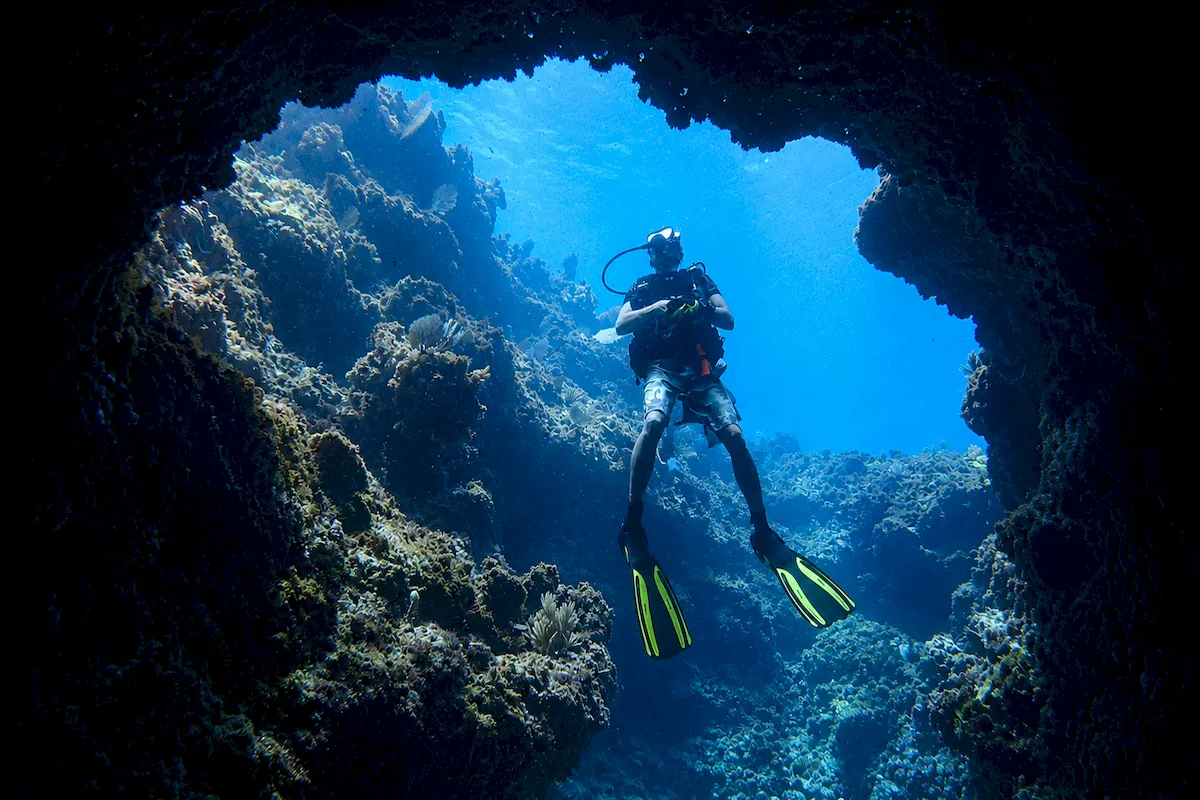
MUSA underwater museum
The Manchones gallery of MUSA places hundreds of sculptures within the protected marine environment near Isla Mujeres. The works gradually interact with marine growth and passing animals. The official MUSA description places the gallery at approximately 8 to 10 meters.
Fame does not make the site automatic. Divers need controlled buoyancy and awareness of other visitors; snorkelers see installations and reef features from the surface according to the actual route.
C-58 and C-55 wrecks
C-58 and C-55 are established wreck objectives where steel structure, current, depth and open-water descents can create a more demanding dive. Marine life may gather around the hulls, but conditions change significantly.
Neither wreck should be treated as an automatic penetration dive. Any route into a structure must match the diver's certification, training, equipment, gas plan and the guide's approved plan.
Advanced park reefs and topography
Punta Negra, No Name, El Túnel, Grampín, Santo Remedio, Cuevas de Afuera and La Lavandera or La Bandera represent current-driven reefs, corridors, openings and more complex underwater terrain. Maintaining depth, spacing, communication and situational awareness can matter as much as admiring the reef.
Cave-like names do not authorize overhead penetration. The guide defines the legal and safe route for the group's actual qualification and conditions.
Offshore expedition objectives
Sleeping Shark Cave, Ultrafreeze, Media Luna, Pailas, El Hondureño, Chairel, Piedra Atravesada, Piedra de la Cherna, El Cantil, Piedras Negras, Fondo Seco, Cueva del Tiburón Toro, La Picuda, Pargos and Topen belong to a less standardized offshore network.
These are custom operations rather than ordinary published tours. Distance, current, fuel, vessel endurance, support, diver qualifications, gases, equipment and viable alternatives are assessed for each plan. Wildlife is never guaranteed by a site's name.
Ojo de Agua and Arrowsmith
Ojo de Agua is a submerged geological formation where fresh water emerges beneath the Caribbean. Its entrance is around 30 meters or 100 feet, with a restriction leading into an overhead environment. Anything beyond open water requires appropriate technical or cave training, redundancy and a separately approved plan.
Arrowsmith is a broad offshore bank, not a single reef pin. Its remoteness makes weather development, navigation, fuel, surface support, diver profiles and contingency planning part of the dive itself.
Los Picos: an exclusive, demanding objective
Los Picos sits alongside Arrowsmith among ATIM's most demanding custom expedition objectives. Depth and current can bring the selected profile close to technical-diving requirements. Advanced certification alone is not sufficient to confirm participation.
Recent experience, relevant training, the planned profile, equipment, gases, conditions and surface support must be reviewed before any commitment. A technical profile requires the appropriate qualifications and operational plan; a site name is not permission to exceed a diver's limits.
How the final site is selected
- Certification and relevant specialties
- Logged dives and recent activity
- Experience with current, depth, wrecks, blue water or overhead environments
- Buoyancy, trim, propulsion, descent control and communication
- Gas use, planned profile and equipment configuration
- Weather, sea state, visibility and current
- Park access, permits and operating restrictions
- Boat endurance, fuel, support and emergency planning
- Acceptable alternative sites
The captain and dive leader make the final operational decision. A site may change or be canceled when readiness, equipment, access or conditions do not support the original objective.
Choose the right diving product
| Experience | Best starting point |
|---|---|
| Reef Diving | Certified divers seeking shallow Manchones routes |
| Try Scuba | Non-certified guests completing a supervised introductory program |
| Night Diving | Certified divers exploring suitable shallow sites after sunset |
| Adventure Diving | Qualified divers considering wrecks, current-driven reefs, deeper sites or custom expeditions |
| Training | Divers who need additional skills before a desired environment |
Responsible diving
Maintain neutral buoyancy, secure gauges and cameras, avoid contact with coral, sculptures, wrecks and the bottom, and never feed, touch, chase or collect marine life. Follow moorings, protected-area rules and the site-specific route.
The responsible decision may be to reduce task loading, select a different site or postpone the dive.
Plan with a local team
Plan from the diver outward, not from a famous site name
Send certification, recent experience, logged dives, equipment needs, dates and preferred environments for an honest recommendation.
Discuss adventure divingAsk on WhatsAppFrequently asked questions
Which sites may suit beginner certified divers?
The shallow Manchones area may be considered, including Manchones, Jardines, La Cruz and selected MUSA routes. Final selection depends on conditions and the group.
Can I request a specific site?
Yes, but no location is guaranteed. Certification, recent experience, weather, current, access and logistics determine the final plan.
Are C-58 and C-55 beginner wreck dives?
They require an individual review of depth and current experience, recent diving, buoyancy, descent control and actual conditions.
Can I penetrate a wreck?
Penetration is never implied. It requires appropriate training, equipment, gas planning, conditions and an approved route.
Are offshore sites normal two-dive tours?
No. Ultrafreeze, Ojo de Agua, Arrowsmith and other offshore objectives require separately planned expedition logistics.
Is marine life guaranteed?
No. Site descriptions explain geography and character, not guaranteed wildlife encounters.
Why are exact coordinates omitted?
Coordinates are not a substitute for legal access, local navigation knowledge and a professionally managed dive plan.
Continue planning
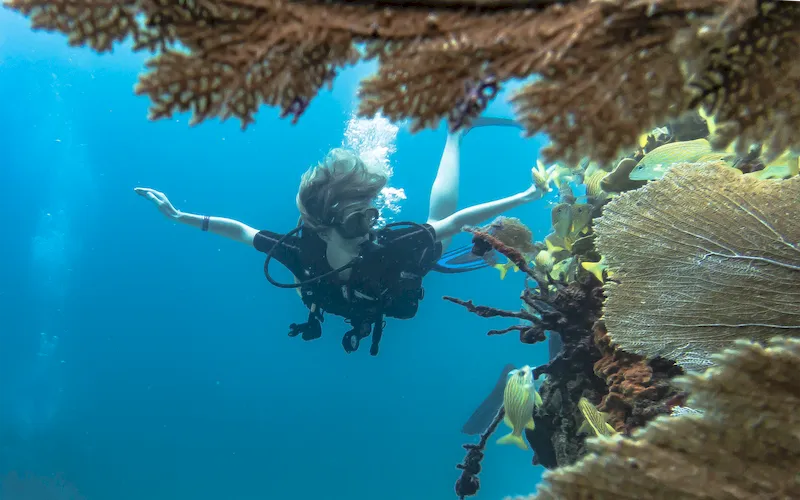
Snorkeling vs Scuba Diving at MUSA and Manchones Reef
Compare snorkeling and scuba diving at MUSA and Manchones near Isla Mujeres based on depth, experience and what you can realistically see.
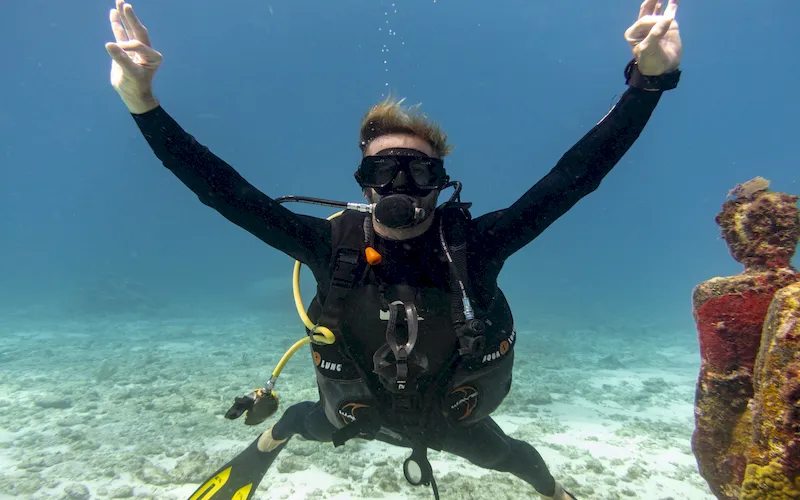
First-Time Scuba Diving in Isla Mujeres: What Really Happens
Learn what to expect from a first-time scuba experience in Isla Mujeres, including instruction, shallow-water skills and guided reef dives.
Isla Mujeres Travel Guide: What to Know Before You Go
Plan an Isla Mujeres trip with practical local guidance on arrival, seasons, transportation, beaches and ocean experiences.